
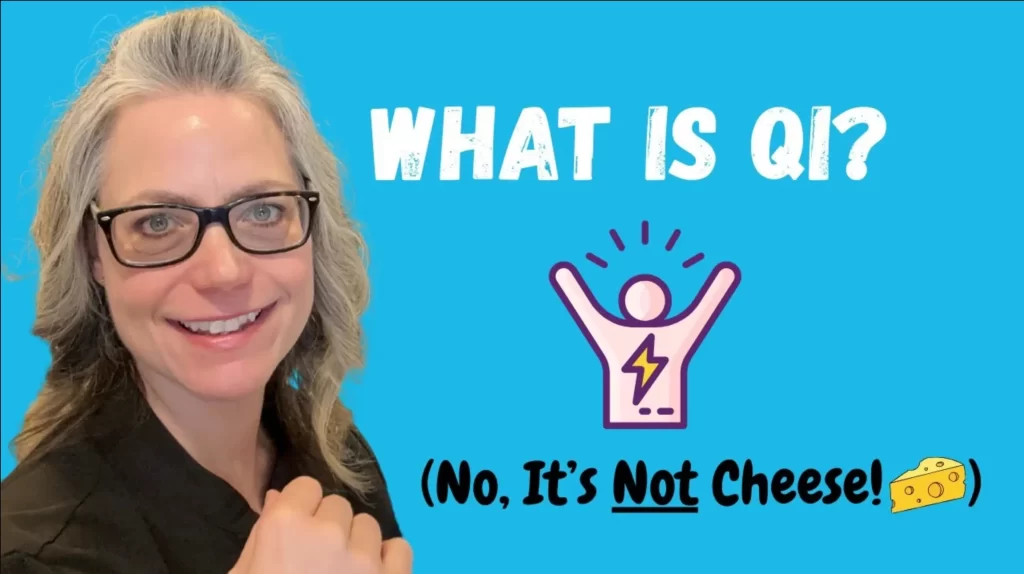
In this video, I introduce the concept of Qi, or energy flow, which is a central idea in traditional Chinese medicine. I explain how Qi moves through energy pathways in the body, supporting everything from digestion and immunity to our emotions. When Qi is blocked or deficient, it can lead to issues like stress, fatigue, and various health problems. I share how acupuncture, movement, deep breathing, and certain foods can help restore the smooth flow of Qi. I also highlight the importance of emotional release for maintaining healthy energy. My aim is to help you understand your own health better through these timeless principles.
Topics Covered in this Video
- The concept of Qi (energy flow) in traditional Chinese medicine
- Signs and effects of Qi stagnation and Qi deficiency
- How acupuncture influences and balances Qi
- Lifestyle and holistic practices to support Qi flow (movement, diet, herbs, breathing techniques)
- The importance of emotional release for maintaining healthy Qi flow
Connect with Vans
Unedited Video Transcript
Hi everyone and welcome back to Blue Frog Wellness. I’m Vanessa, a doctor of acupuncture, and I’m very excited that you’re here today with me as we’re going to talk about one of the most central concepts in traditional Chinese medicine, and that is the concept of Qi, or energy flow. So let’s dive in. Hi, I’m Vanessa from Blue Frog Wellness. Welcome to my channel where I share insights from traditional Chinese medicine to help you better understand your own health and well being. Before we begin, let me be clear. The information in this video is for education and information purposes only. It is based on traditional Chinese medicine principles which have been practiced for thousands of years, but it is not a substitute for medical treatment or advice.
If you have health conditions, please consult a licensed healthcare provider. In this video, we’ll explore how TCM views the concept of Qi or energy, and that will include recommendations for some lifestyle and holistic practices you can use on your own. I will also reference established sources when discussing health related topics to ensure accuracy and clarity when we talk about traditional Chinese medicine. Chi is your body’s vital energy. It’s what keeps you alive and functioning. In tcm, we say that Qi flows through your body along energy pathways called meridians, kind of like how blood flows through your veins. Qi powers everything, your digestion, your circulation, your immune system, even your thoughts and emotions. So when Chi is balanced and moving smoothly, you feel healthy and strong and full of energy.
But when she is blocked or deficient, that’s when problems arise. So Qi moves through the body in a very natural rhythm. It should always be freely flowing. However, there are times when she is going to have an obstacle, much like a tree falling across a river and damming up the water. When we have an obstacle in the way of our chi flow, that’s when we experience problems. A common example is of Qi stagnation is stress. So when we’re tense, our energy locks up, causing headaches, tight shoulders and digestive issues. On the other hand, we could also have Qi deficiency, which happens when we’re overworked, undernourished, or we just don’t rest enough.
That’s when we feel exhausted, weak and lightheaded. So signs of Qi stagnation. If you have a block to that Qi flow or something in the way, you might feel tense or frustrated or irritable. You might have muscle tightness, tension headaches. You may have digestive bloating or discomfort. And of course, any element of premenstrual syndrome or PMS or irregular periods is all a Factor of blocked Qi. So Qi stagnation. Signs of Qi deficiency include things like feeling tired all of the time, few feeling shortness of breath, having weak digestion.
So having very, you know, not digested food that you can absorb and make good quality blood. You, in fact, have weak digestion and bloating and gas and probably looser stools. You may have frequent colds, you might feel cold, you might feel weak, and you very well may feel unmotivated because your Qi is too deficient. So a good way to think about it is that stagnation feels like stuck and tense, while deficiency feels weak and drained. So the first way is, of course, with acupuncture. Acupuncture regulates the smooth flow of Qi. That’s why we do it. By using certain points, we can move Qi, we can enhance Qi, we can remove any obstacle, any obstruction, any Qi stagnation.
And we can also find out if your Qi is deficient, ways that we may tonify that Qi, ways that we can amplify the Qi, or we can nourish the Qi. So there’s many different tools we have in the acupuncture toolbox, but acupuncture is by far the best way to influence the free flow of your own Qi. The second way is with movement. So movement will always get the Qi flowing. Why? Because we’re literally moving our physical body, and you move the physical body, you’re going to move the energy that is within it. So movement of any sort, Tai chi, qigong, yoga, light walking, swimming, anything that you find is relaxing and restorative in terms of movement, a light cycle, or going to one of your fitness classes that you enjoy whenever you’re doing smooth, regulated movement, even a walk around your block will go so far in moving your Qi flow. So get active. Number three is deep breathing.
The breath is another great way that we can move our Qi. So whenever we are getting tight and tense and stressed out, we typically shallow breathe, right? We don’t even realize we’re doing it. But we’re all tight in the shoulders, you know, contracted and having tension headaches and muscle and neck tension. But we also are not breathing. So one way to move that Qi is to get some deep relaxation breathing. And you can do any sort of technique. You could stop and take five deep breaths. That will certainly help.
We can do box breathing, which is going to help regulate your nervous system. And essentially what you’re doing there is inhaling for four counts. We’re gonna pause for four counts, we’re gonna exhale for four counts. And pause for four counts. So box breathing is a really wonderful way to regulate chi because we have that rhythmic nature to it. And then, of course, there’s herbs and diet. So some foods are better at moving chi than others. So ginseng is going to tonify your Qi, so that will enhance your Qi flow.
But things like ginger and onions and cinnamon and warming spices, things that are pungent and are typically revered as something that is sort of hot in nature or moving in nature, when will also move your chi. So we can do that with lemon in your water. The sour foods are wonderful for moving chi flow. Anything pickled, anything with a vinegarette. Not that I condone eating candy, but if you are going to eat candy, eat the sour key candy or the sour patch kids, because the very nature of the sour flavor moves our energy. So anything that gets your mouth to pucker up when you’re eating it, it’s going to also move your chi flow. So keep in mind sour foods and herbs, herbs as well as food will move your Qi flow. And lastly, anything you can do to obtain emotional release.
So much of what we stress about in life are things that we are thinking and feeling and, you know, ruminating about or however that goes where. We hold onto things much longer than we absolutely need to. So find good ways, whether that’s journaling or going to therapy, joining a meditation class or doing some guided meditations, all of these things will help you to release those emotions that are stored in your body. And by doing so, we can unblock your Qi. So in traditional Chinese medicine, we don’t just treat your symptoms, as you can see. We actually look for what is at the root, what is the underlying cause of what’s going on, whether that be an obstacle or Qi stagnation or something that could be deficient and needs to be tonified. Whatever we do, we’re looking to restore the balance of flow flow within your body, which helps you feel better in every aspect of life. So if this video helped you understand a little bit more about the concept of Qi in traditional Chinese medicine, I’d love to hear about it.
Leave me a comment below. Also, if you have any experiences that you can attribute to Qi stagnation or Qi deficiency, please also share your experience. And if you want to learn more, subscribe to this channel, because next week we’ll be talking about Yin and Yang theory, which is essentially going to talk about the foundation of balance in traditional Chinese medicine. Thanks so much for watching. See you in the next one.